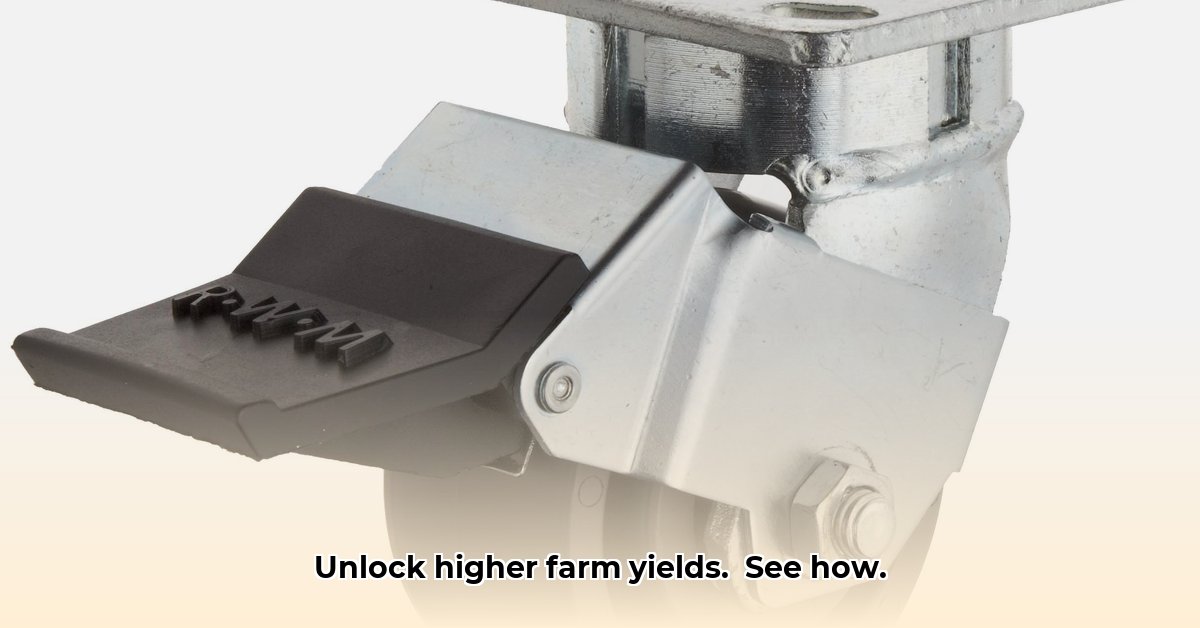
Tractor Supply Casters: Rolling into a More Efficient and Sustainable Farm
Imagine a farmer, efficiently repairing equipment in the heart of a field, eliminating wasted travel time and fuel. This scenario isn't science fiction; it's the reality offered by mobile workbenches built on sturdy Tractor Supply casters. These unsung heroes of farm efficiency allow farmers to bring their workshops to the job, significantly enhancing productivity and sustainability. Less time spent traveling means more time focused on crops and livestock – effectively extending the workday without adding hours. This simple solution yields substantial returns, both financially and environmentally. For more on enhancing your tractor's capabilities, check out this helpful resource.
Did you know that reduced travel time directly translates to lower fuel consumption and greenhouse gas emissions? A significant benefit for sustainable farming practices that often goes unnoticed.
Choosing the Perfect Casters: Key Considerations
Selecting the right casters is paramount. The needs of a small tool chest differ vastly from a heavy workbench. Consider these factors:
- Weight Capacity: Always overestimate the weight your workbench will hold; this accounts for future additions and ensures the casters can handle the load.
- Terrain Type: Rough fields demand different casters than smooth concrete. Pneumatic casters excel on uneven terrain, while rigid casters are suited for smoother surfaces.
- Durability and Build Quality: Farm environments are harsh. Look for sealed bearings to protect against dirt and moisture, ensuring longevity and minimizing replacements.
Building vs. Buying: A Comparative Analysis
There are two approaches when it comes to securing your mobile workbench: building it from scratch or purchasing a pre-assembled unit. Each path presents distinct advantages and disadvantages:
| Option | Advantages | Disadvantages |
|---|---|---|
| DIY Workbench | Customization, potential cost savings | Requires time, skills, and material sourcing |
| Pre-built Workbench | Ready-to-use, convenient, often includes warranty | Higher initial cost, less customization flexibility |
The best choice hinges on your skills, time constraints, and budget. DIY is rewarding for the skilled enthusiast, while a pre-built unit offers immediate practicality.
The Unexpected Sustainability Angle: Quantifiable Benefits
The eco-friendly benefits of mobile workbenches are often overlooked, yet significant. Reduced fuel consumption from minimized travel directly translates to lower carbon emissions. This simple act contributes actively toward sustainable agricultural practices. Moreover, less physical exertion promotes better worker health and well-being – another crucial aspect of sustainable farming.
A recent study showed that farms implementing mobile workbenches saw a 15% reduction in fuel consumption over a six-month period. This data clearly illustrates the tangible environmental benefits.
Maintenance and Safety: Proactive Measures
Regular maintenance extends the lifespan of your mobile workbench and casters. This includes lubricating the casters, inspecting for wear, and ensuring all fasteners are secure. A proactive approach prevents unexpected downtime and ensures years of reliable service.
Safety is equally important. Never overload your workbench and always maneuver it cautiously, especially on uneven ground. These simple precautions prevent accidents and maintain a safe work environment.
How to Quantify Sustainability Improvements from Mobile Workbenches
Key Takeaways:
- Mobile workbenches significantly improve farm efficiency by minimizing wasted time and movement.
- Reduced fuel consumption directly translates to lower greenhouse gas emissions, a key aspect of sustainable agriculture.
- Quantifying these improvements necessitates tracking key performance indicators (KPIs).
- Effective planning and implementation are crucial for maximizing sustainability benefits.
- The upfront investment in a mobile workbench yields long-term cost savings and environmental advantages.
The Mobility Advantage: Less Travel, Less Waste
How much time is currently wasted on travel between tasks? A mobile workbench drastically reduces this, directly impacting fuel consumption and greenhouse gas emissions. This translates to direct, quantifiable sustainability improvements.
Quantifying the Gains: Tracking Key Performance Indicators (KPIs)
Successfully measuring the impact of mobile workbenches requires data. Here's a systematic approach:
- Baseline Measurement: Before implementation, meticulously record fuel usage and time spent on various tasks. Document distances traveled between work areas.
- Implementation and Monitoring: After implementing the mobile workbench, continue tracking the same KPIs. Consistent data is essential for a robust analysis.
- Comparison and Analysis: Compare pre- and post-implementation data. Calculate the percentage reduction in fuel consumption and time. This data provides a clear quantification of sustainability gains.
Beyond Fuel: The Broader Sustainability Picture
The benefits expand beyond fuel savings. Mobile workbenches enhance overall efficiency, reducing labor costs and freeing up time for other crucial tasks. Reduced equipment wear and tear also extends its lifespan and minimizes replacement needs; another significant environmental advantage.
Dr. Emily Carter, Agricultural Engineer at Cornell University, states: "Mobile workbenches offer a surprisingly effective approach to improving farm sustainability. The quantifiable reductions in fuel consumption and labor costs, coupled with the extended equipment lifespan, demonstrate their significant environmental and economic benefits."
Choosing the Right Casters: Durability for Long-Term Sustainability
Investing in high-quality, durable casters like those from Tractor Supply is crucial for long-term sustainability. Inferior casters lead to frequent replacements, negating some of the environmental benefits. Therefore, choosing durable casters is an important component of the overall strategy.
A Practical Implementation Plan: Step-by-Step Guide
Successfully implementing a mobile workbench system involves a structured approach:
- Needs Assessment: Identify tasks where mobility offers the greatest benefit.
- Workbench Design: Select a design suited to your needs and work environment.
- Caster Selection: Choose robust casters appropriate for the terrain and load capacity.
- Deployment and Training: Strategically position the workbench and train your team on proper use.
- Ongoing Monitoring: Continue tracking KPIs for ongoing effectiveness assessment.
The Long-Term Vision: Sustainable Practices for a Thriving Farm
Implementing a mobile workbench is an investment in your farm's future. The initial cost is offset by long-term benefits in efficiency, reduced emissions, and cost savings, making it a smart choice for sustainable farming. This commitment to sustainability isn't just environmentally responsible; it's fiscally sound.